A Tube, a Patch of Moss, and a Cloud Beyond Patents
Lately, I've been reading patents.
Fog generators. Atomization systems. Airflow designs. One after another.
I wanted to know whether there was a technical moat strong enough to protect an idea—a structure that could truly belong to me.
The more I read, the quieter I became.
Because I realized this road had been traveled long before I arrived.
Some people have spent decades studying atomization. Others devoted their careers to airflow. Landscape designers were guiding mist through rocks and gardens long before I was born. And when it comes to moss, there are people who have spent an entire lifetime simply watching it grow.
For a while, I wondered if there was anything left for me to discover.
Then I remembered a small experiment I had almost forgotten.
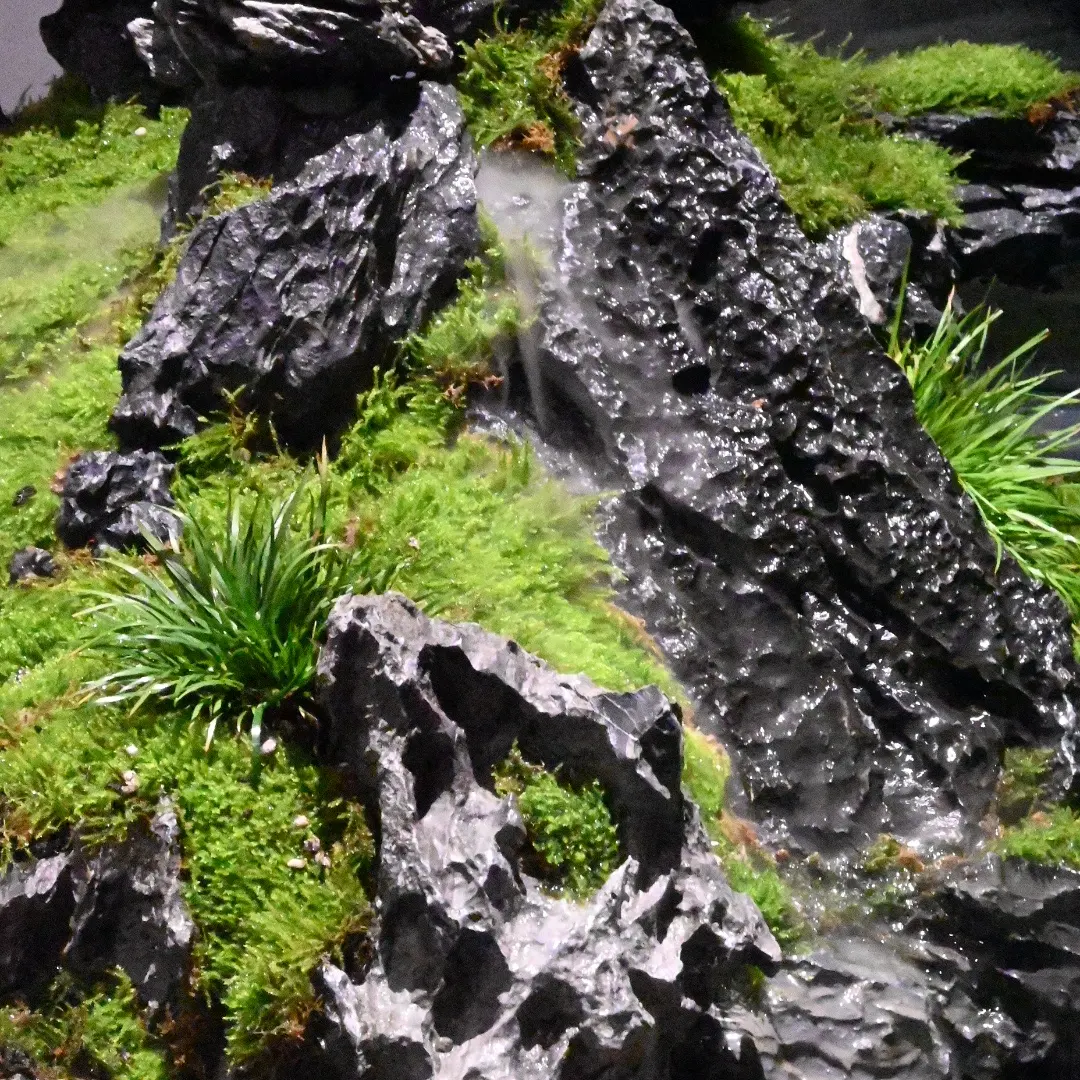
One day I took an ordinary silicone tube and guided the mist from an ultrasonic atomizer into the center of a stone. I covered the outlet with a thin layer of moss.
Nothing about it was sophisticated. The tube was ordinary. The moss was ordinary. There was no clever engineering hidden inside.
Yet when the mist began to seep quietly from beneath the moss, something changed.
It no longer rushed upward. Instead, it clung to the stone, spreading slowly, almost hesitantly, as if it were deciding its own path.
I stood there for a long time, simply watching.
"It can't be this simple," I thought.
"It's almost too simple."
But that embarrassingly simple moment quietly changed the question I had been asking.
A cloud never follows a blueprint. It appears when water, temperature, terrain, and time happen to meet.
Perhaps I had been asking the wrong question all along. I wanted to create a cloud. Instead, I kept trying to invent a better fog machine.
Very little in nature is truly new.
Water. Stone. Wood. Mist. Light.
They have always been here.
Bonsai never invented the tree. Landscape gardens never invented the mountain. Pottery never invented clay.
Yet with the same materials, one person creates an entire world, while another merely assembles objects.
The difference has never been the materials themselves. It lies in how long someone has lived with them—and whether they are patient enough to let them find their own form.
Anyone can buy the same tube. Anyone can place the same patch of moss.
But what is far more difficult to reproduce is knowing why the mist should emerge here, and not somewhere else. Why the moss belongs in this exact place. Why this corner needed silence.
We all work with the same materials. What differs is the hand behind them.
For a long time, I was trying too hard to prove that I had invented something no one else had. Somewhere along the way, I forgot why I started.
All I ever wanted was to let a stone and a patch of moss breathe a little more like nature.
Patents matter. They protect ideas, structures, and engineering.
Technology can be replicated. Structures can be reverse-engineered. Taste cannot.
Looking back, that little silicone tube brought me closer to my original question than any patent document ever did. Not because it was ingenious. But because it was quiet enough to let the mist find its own way.
Many people have walked this road before me. I'm simply another traveler in that long conversation between humans and nature—someone who stopped, watched, waited, and eventually found a small tributary of my own.